Tiong Bahru Park playground: sensory motor map
What each part works on, and what to try on your next visit
@msoccupationaltherapy
 1
2
3
4
5
 6
 7
8
9
 10
- 1
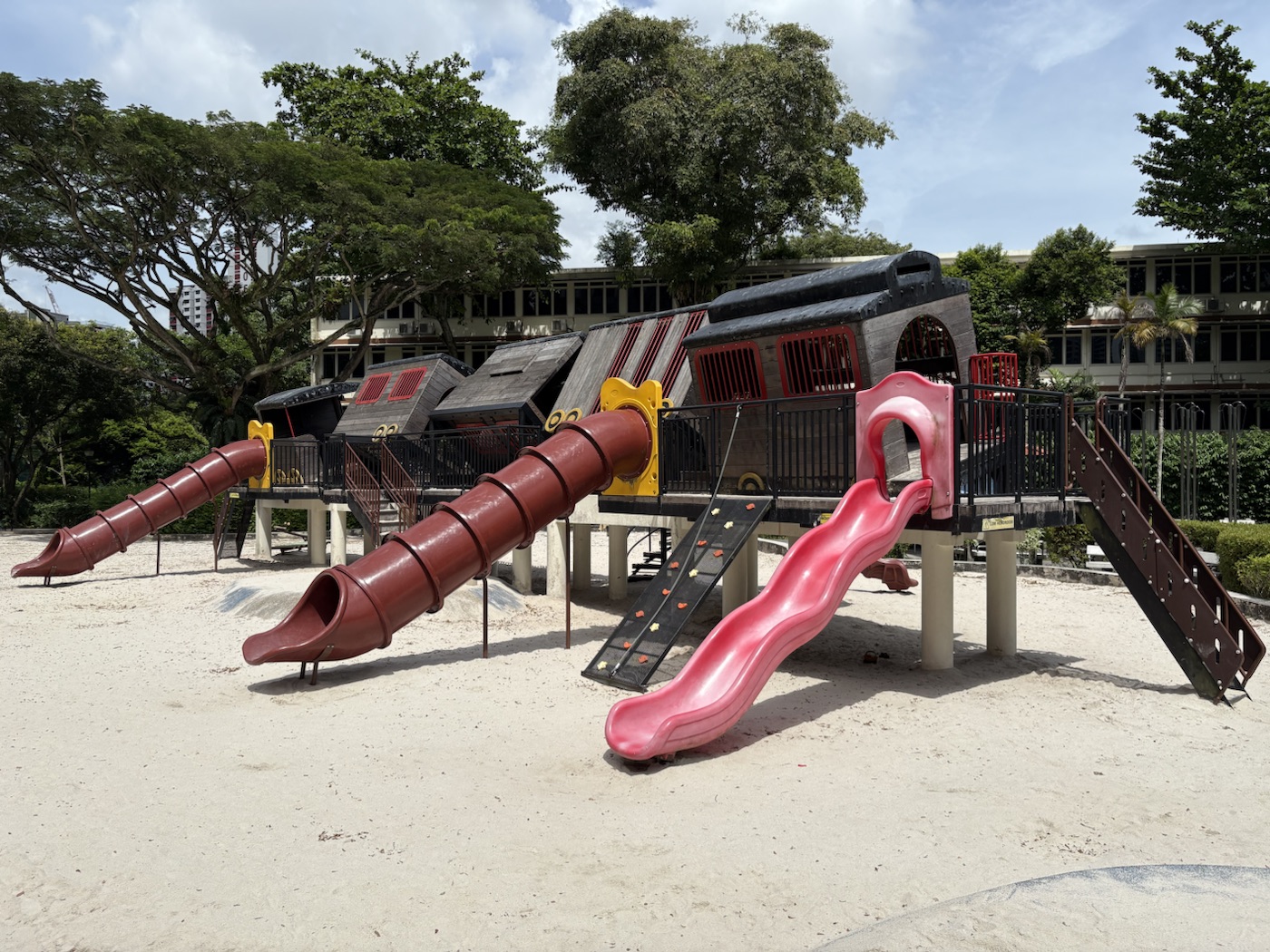
Tilted carriages and cabin VestibularProprioceptiveRisk
Works on: balance as the ankles, hips and trunk keep adjusting to a sloping floor; vestibular and proprioceptive input.
Try: cross slowly, then low, then upright. Notice which way they choose.
- 2
Tube slide VestibularRisk
Works on: fast linear vestibular input (usually alerting); an enclosed, dark space that some find calming and others find too much.
Try: never push a hesitant child. Let them watch others first, or start on the open slide.
- 3
Wavy slide VestibularRisk
Works on: vestibular input with small speed changes; trunk control; an open view, which many find less daunting than the tube.
Try: sitting up, lying back, feet first. Each posture asks something different.
- 4
Climbing ramp ProprioceptiveRisk
Works on: proprioceptive input; hand and foot coordination; route planning.
Try: ask "where could your foot go?" instead of lifting them.
- 5
Stairs and ladders ProprioceptiveRisk
Works on: strength, alternating feet, grip on the tall ladder, and choosing a height they feel ready for.
Try: let them decide how high to go.
- 6
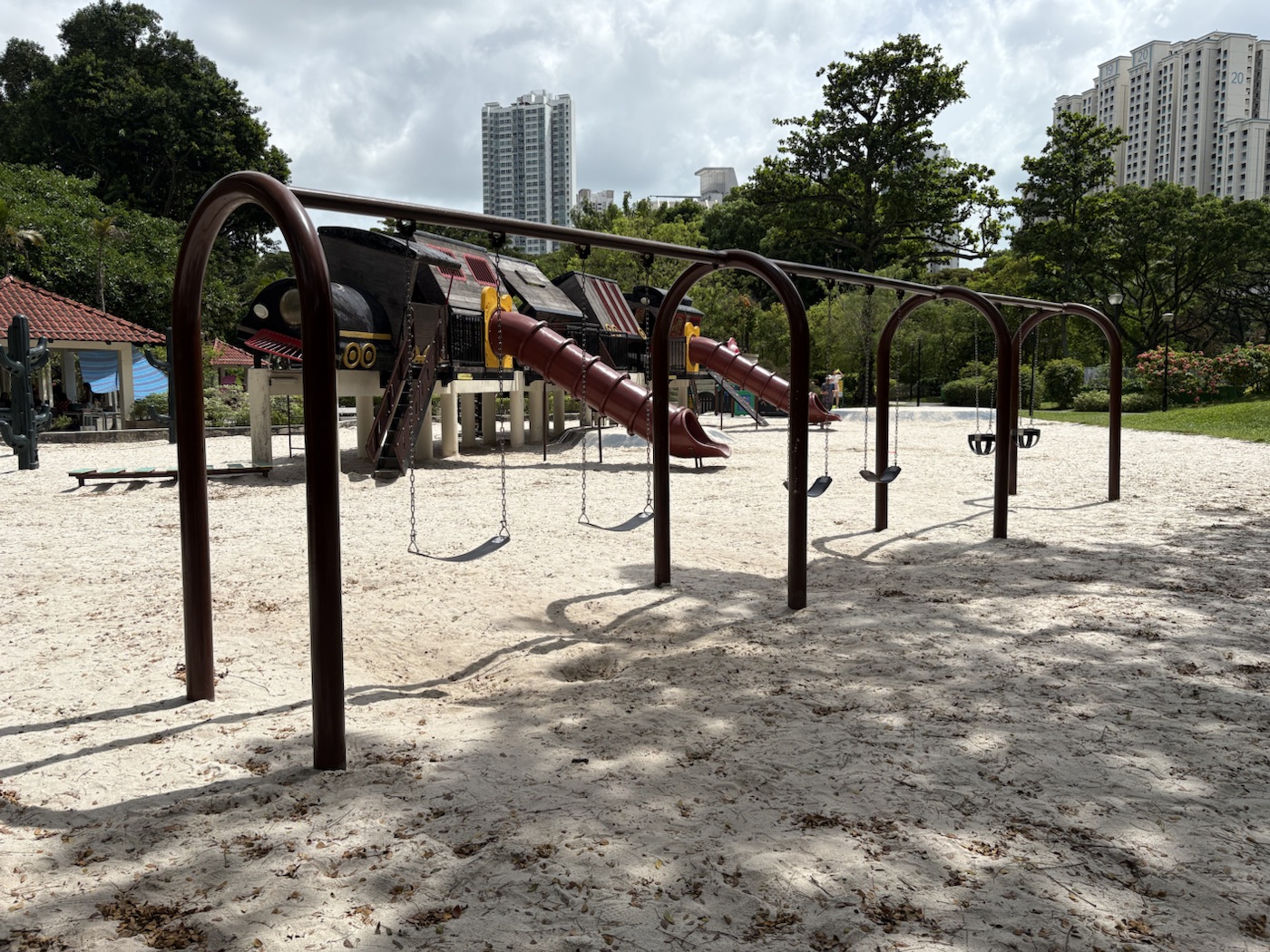
Swings VestibularProprioceptiveRisk
Works on: linear vestibular input. Slow and rhythmic calms; fast swinging alerts. Also targets trunk control, grip strength and timing.
Try: a gentle sway after a long day, bigger swings to wake their body up. Let them sort out turn-taking first.
- 7
Sand ProprioceptiveTouchSocialCreative
Works on: heavy work (dig, carry, pour); touch; balance on a surface that gives; solo, side-by-side and creative play.
Try: bring a bucket, spoon and sieve. If sand is new to them, let them watch or use a tool first.
- 8
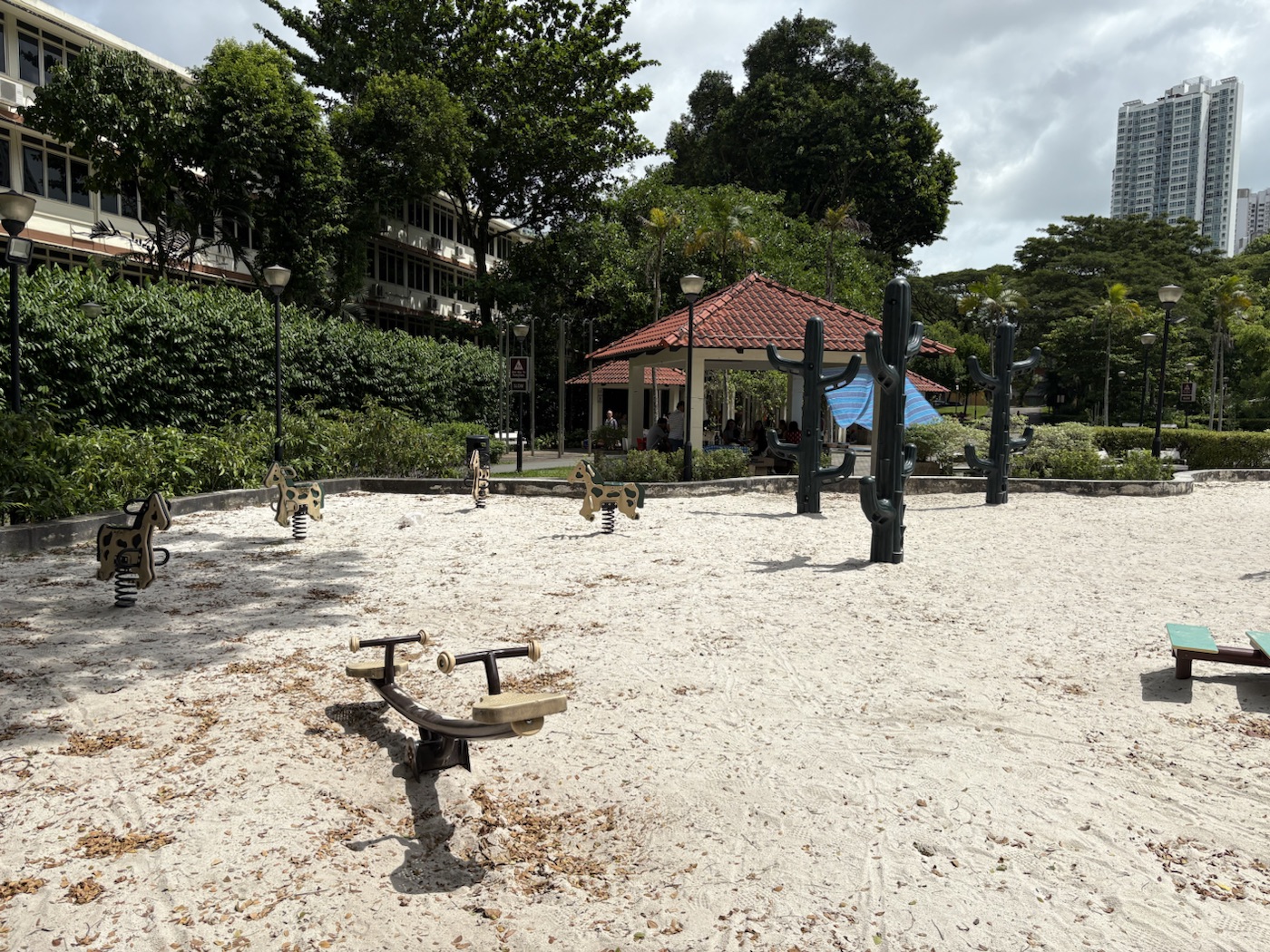
See-saw VestibularProprioceptiveSocial
Works on: up-and-down vestibular input; pushing through the legs; timing and negotiating with a partner; staying balanced as the seat moves.
Try: swap who pushes. Practise "ready, steady, go".
- 9
Spring riders VestibularProprioceptiveCreative
Works on: rhythmic rocking; core strength, grip and balance.
Try: slow rocking which can be calming. A pretend horse ride works too.
- 10
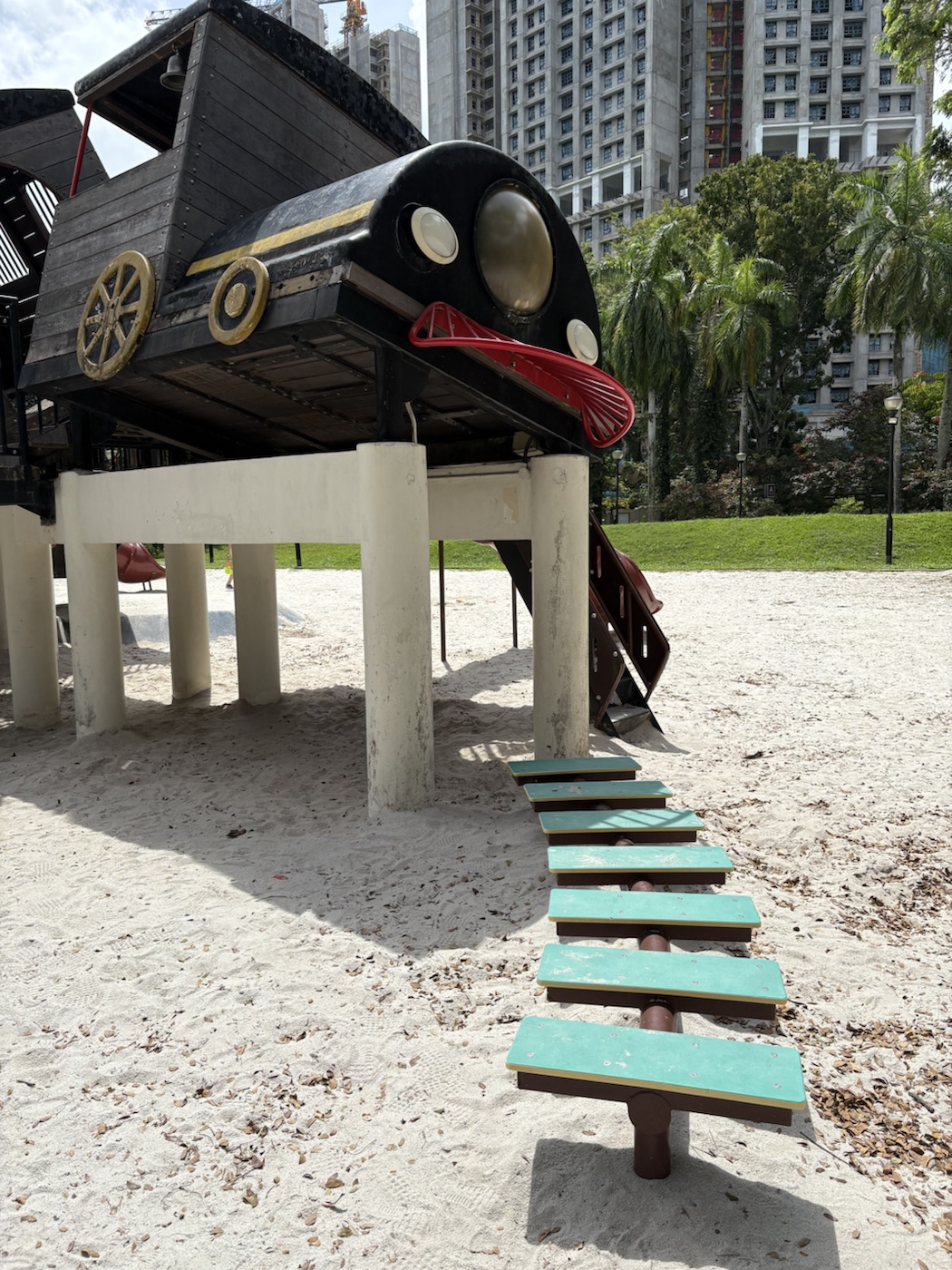
Stepping planks (in front of the train) Creative
Works on: careful foot placement on fixed planks; motor planning; visual attention.
Try: walk, hop or play follow the leader. A good first step before the tilt.
- 11
Rings, rope net and cables (inside the train) VestibularProprioceptiveTouchCreativeRisk
Works on: heavy work through the arms and shoulders; a rope net floor that shifts with each step; reaching and holding to cross a tilted cabin.
Try: let them choose how far to go and find their own way across.
Three kinds of play (HDB's Play Values Framework): physical, social and creative. Most parts of this playground offer more than one.
Educational only. This describes how everyday play tends to work on the body and is not individual clinical advice. If you are concerned about a child, speak with a qualified health professional.
Read the full article on
msoccupationaltherapy.com